
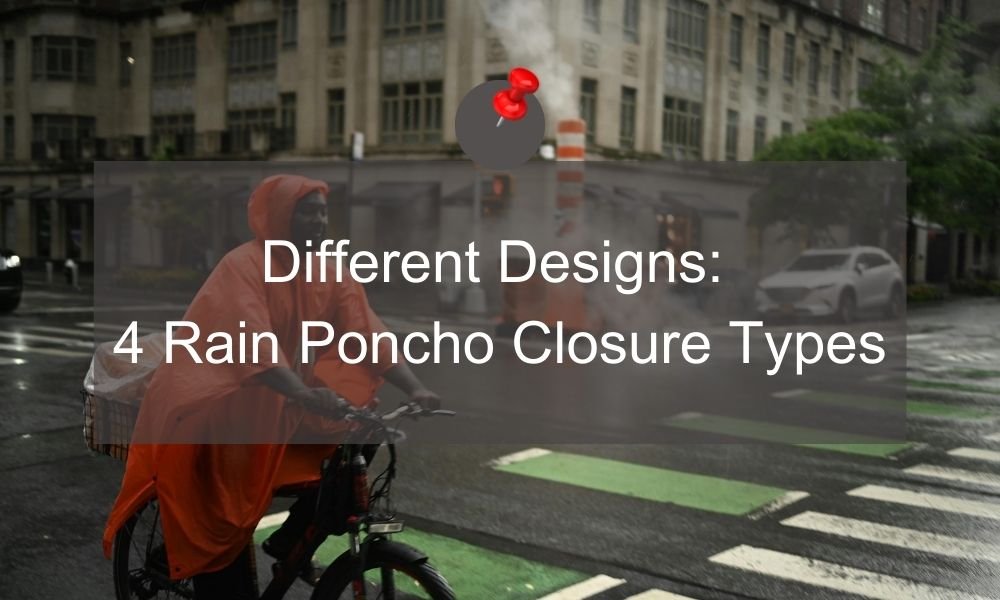
Most rain ponchos we see don’t have any fasteners. We pull the poncho over our bodies from the bottom, leaving only our head exposed, while the rest of our bodies are covered by the large poncho. Is this the optimal design? What if we want to leave the collar open for ventilation? We’ll use four types of rain poncho fastening methods to illustrate which designs best meet our needs.
1. Unfastened Rain Poncho (Lightweight Rain Poncho)

Unfastened rain ponchos are the most common type, whether disposable or reusable. They offer two main advantages:
Easy to manufacture: Unfastened rain ponchos are made by piecing together different waterproof fabrics and then waterproofing them, saving the step of adding extra accessories and reducing overall production costs.
Quick to put on: The pullover design allows you to put it on in seconds.
Benachteiligungen:
Poor adjustability: When you want to breathe, you can only remove the poncho; there’s no way to adjust the zipper or other methods for heat dissipation. When carrying other gear, it can cause a feeling of pressure at the collar.
Applications:
Disposable rain ponchos
Concert/Outdoor activities
Emergency rain ponchos for scenic spots
Spare rain ponchos for bicycles
Common materials:
PE, EVA, PVC
2. Half-Zipper Rain Poncho

The half-zipper design typically extends from the chest to the neck. Its ease of on and off, increased breathability, and wider applicability make this design increasingly popular.
Features include:
Ventilation and airflow: No more removing the poncho entirely for ventilation; simply unzipping it allows heat to escape.
Better neckline seal: The zipper can be adjusted to prevent rain from entering.
Reduced constriction: Compared to a fully enclosed poncho, the adjustable zipper fits most users and reduces constriction around the neck.
Applications:
Hiking ponchos
Camping ponchos
Travel ponchos
Lightweight outdoor gear
Common materials:
PU-coated polyester
Nylon ripstop fabric
Waterproof lightweight fabric
3. Full-Zip Rain Poncho
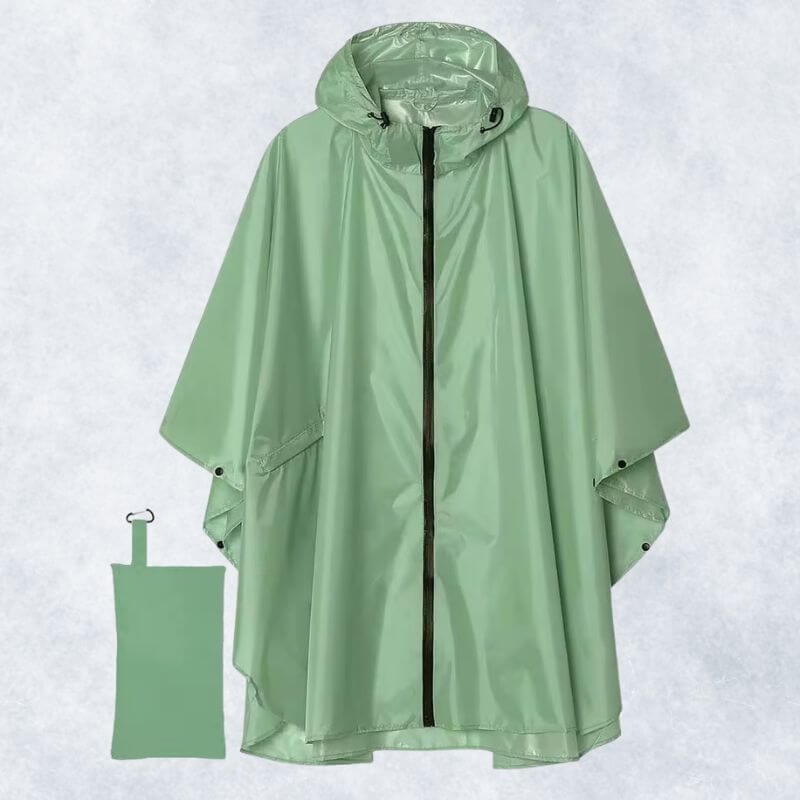
A full-zip rain poncho features a continuous zipper from the collar to the bottom at the front, similar in structure to a raincoat. This design offers the best functionality and convenience.
Easy to put on and take off: This type of rain poncho is suitable for various situations, balancing convenience and breathability, making it ideal for everyday use.
It’s important to note that the zipper’s waterproof design is crucial; otherwise, rainwater will leak through.
Anwendungsszenarien:
Urban commuting
Cycling
Motorcycle poncho
Common Materials:
PU-coated polyester
TPU composite fabric
High-density Oxford cloth
4. Button-down Rain Poncho
Button-down rain ponchos are commonly used as disposable or lightweight ponchos, typically for use in light rain or wind, making them ideal as emergency ponchos. The biggest drawback is their poor waterproof performance; water may seep through the buttons, and the buttons may also pop open during outdoor activities. They are not recommended for use except in emergencies.
Common Materials:
PE
EVA
In Summary
| Closure Type | Convenience | Wasserdichte Leistung | Production Cost | Best Use Case |
|---|---|---|---|---|
| No Closure | Mittel | Mittel | Low | Emergency / Disposable Ponchos |
| Half Zipper | Gut | Gut | Mittel | Hiking / Travel |
| Full Zipper | Excellent | Gut | High | Urban Commuting / Cycling |
| Snap Button | Mittel | Mittel | Mittel | Camping / Outdoor Multi-use |