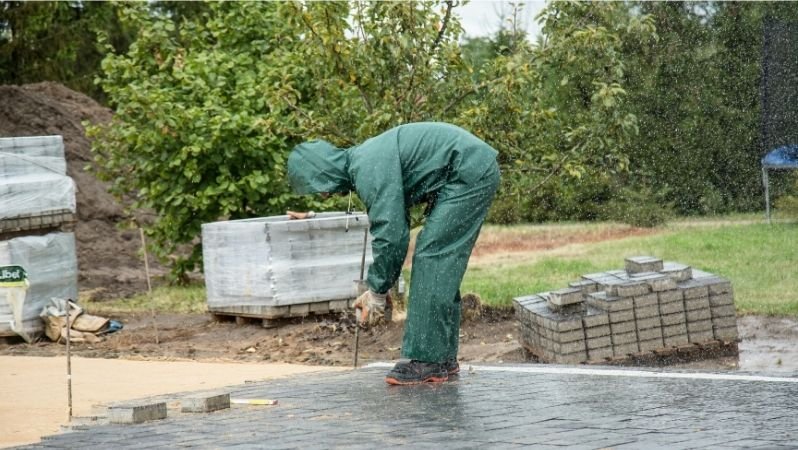
Working outdoors entails contending with unpredictable weather; for construction workers, standard disposable or lightweight capas de chuva often fall short of requirements. A suitable raincoat effectively provides waterproofing and safety protection, even during heavy downpours or in conditions of poor visibility.
When sourcing or purchasing safety raincoats, key factors to consider include material, safety features, waterproofing performance, and durability, as well as the availability of customization options for accessories to meet specific needs.
1. Material Selection: Waterproof, Wear-Resistant, Safe.
There are three common types of waterproof materials: PVC, PU-coated polyester, and Oxford cloth.
For outdoor construction workers, Oxford cloth is the best choice; its high-density weave makes it thicker and more abrasion-resistant—in fact, most police uniforms and outdoor workwear are made from this material.
• Additionally, safety reflective clothing made from Oxford cloth allows for customization regarding color, reflective strips, and various accessories.
For example:
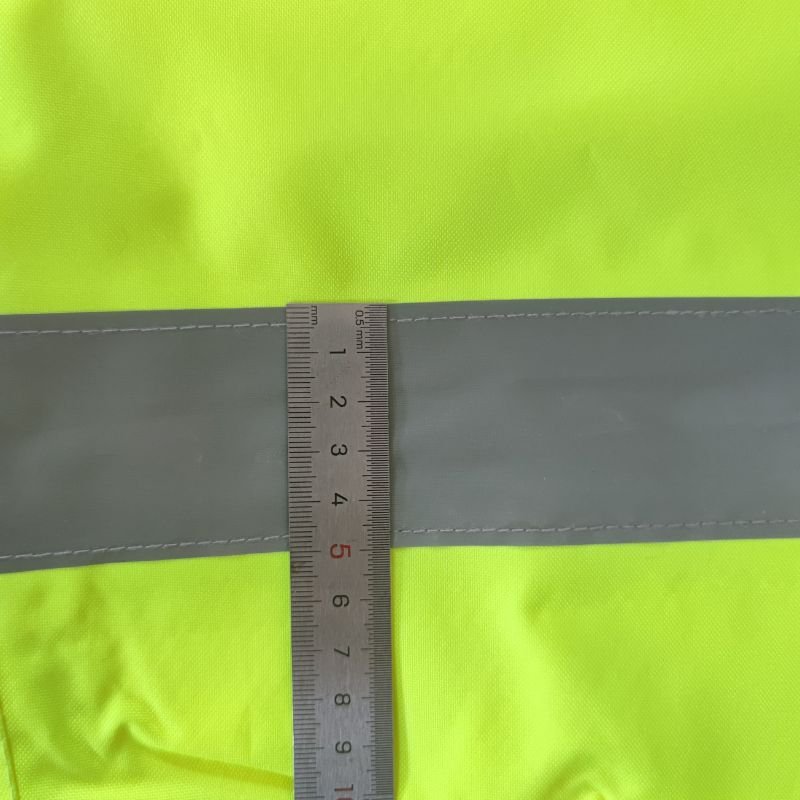
Wider reflective strips
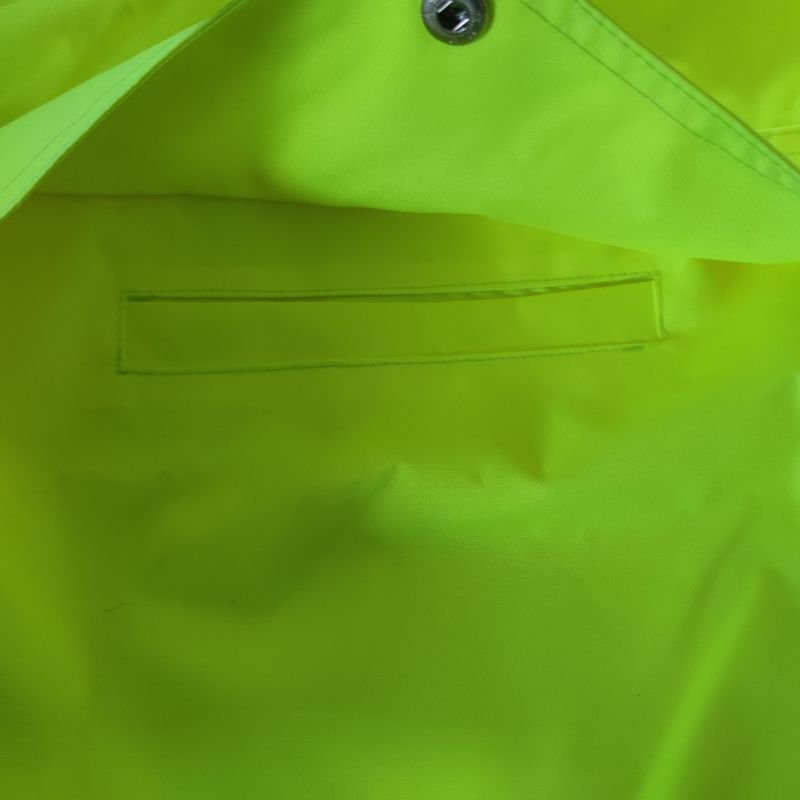
waterproof pockets.
2. Safety and Visibility
Construction sites often involve rain, dust, and the presence of large vehicles and equipment; these conditions can place workers in blind spots, creating significant hazards.
High-visibility raincoats utilize fluorescent colors (such as neon green or yellow) combined with extensive reflective strips (standard width: 5 cm) to effectively enhance visibility and ensure worker safety.
Therefore, high-visibility raincoats with ample reflective coverage are essential for personnel, offering both weather protection and enhanced safety. When purchasing safety raincoats, keep the following in mind:
1. Reflective strip width (standard: 5 cm or greater)
2. Reflective strip coverage area (typically an “H” pattern covering the front, back, and shoulders)
3. Visibility from various angles
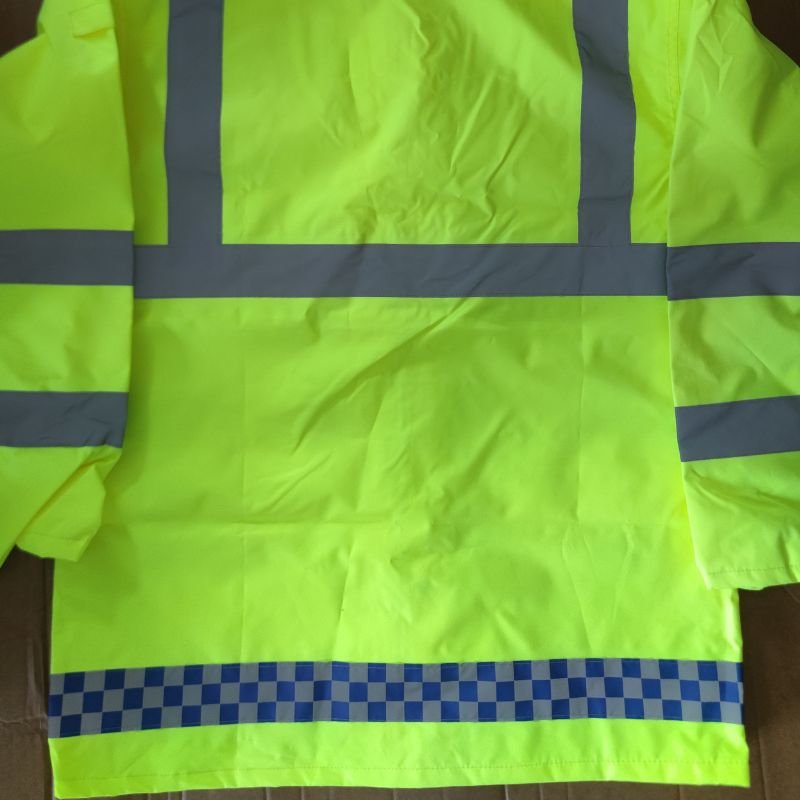
back
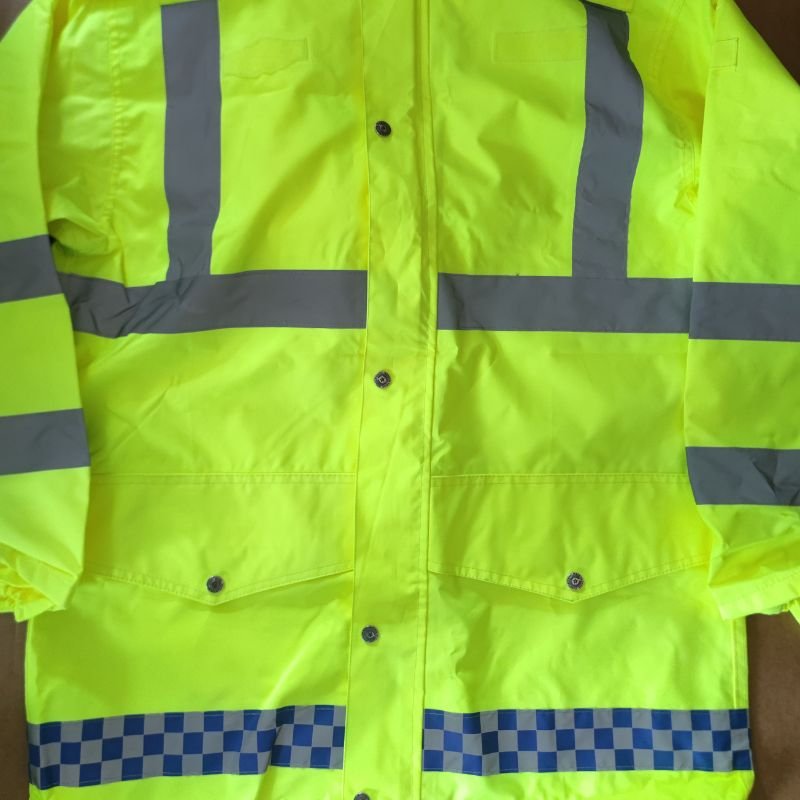
front
3. Choosing the Right Style: Two-Piece Set vs. Long-Style Raincoat
Raincoats generally fall into two categories: two-piece sets (jacket and trousers) and ponchos (long, coat-like garments).
Before making a choice, it helps to understand the differences and suitable use cases for each:
• Two-Piece Raincoat: Consists of a safety jacket and trousers. Suitable for a wide range of scenarios, it offers effective full-body coverage and a snug fit that allows for greater freedom of movement. It is ideal for tasks such as construction work and road maintenance.
• Poncho: A long-style raincoat that can be easily slipped on over other clothing. It provides protection from the head down to the lower legs but restricts movement. It is suitable for light rain and for personnel whose roles do not require frequent movement, such as those performing road maintenance inspections or traffic management.
Recommendation: Opt for a two-piece safety raincoat whenever possible, as it offers superior safety and comfort. Choose a poncho only if you need a raincoat for emergency use.
Visual Reference:
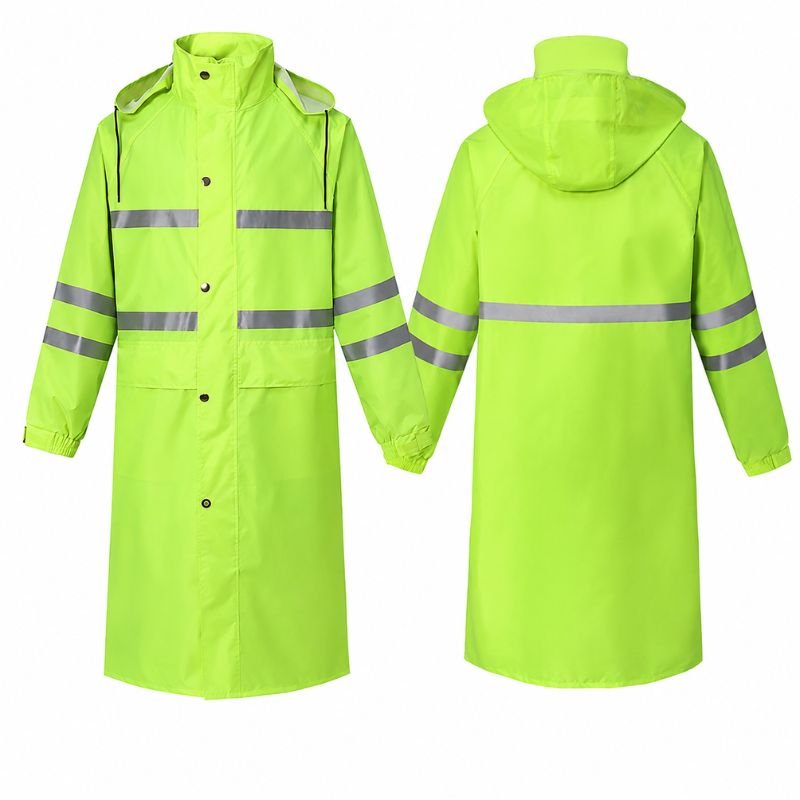
gabardina comprida
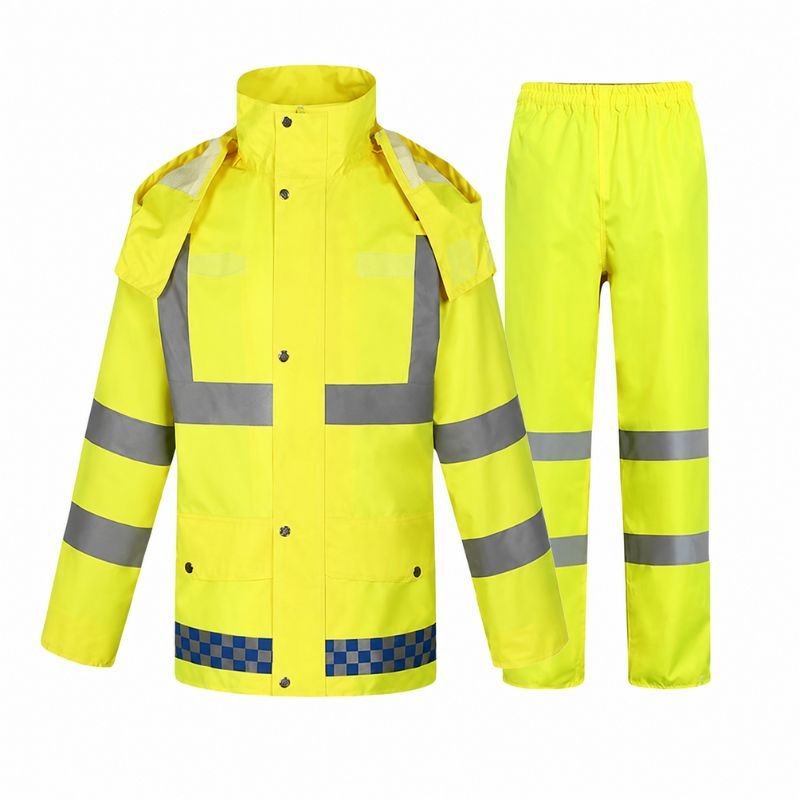
two-pieces raincoat
4. Customization Options and Accessories
For corporate or team procurement involving the printing of logos, emblems, or other team identifiers, the supplier must possess customization capabilities.
Additionally, a storage pouch is a crucial accessory for handling rapidly changing outdoor weather conditions; the quality and size of the pouch are key criteria for evaluation. Features such as chest or shoulder attachments for securing two-way radios can also be incorporated to facilitate instant communication and response to emergencies.
Conclusão
If you are planning to purchase safety rainwear, please consider the factors mentioned above—such as safety features, materials, accessories, and styles—as well as pricing and supplier selection. Should you have further questions or wish to discuss a procurement plan, please contactar-nos; we have already supplied safety rainwear to over 150 construction companies.